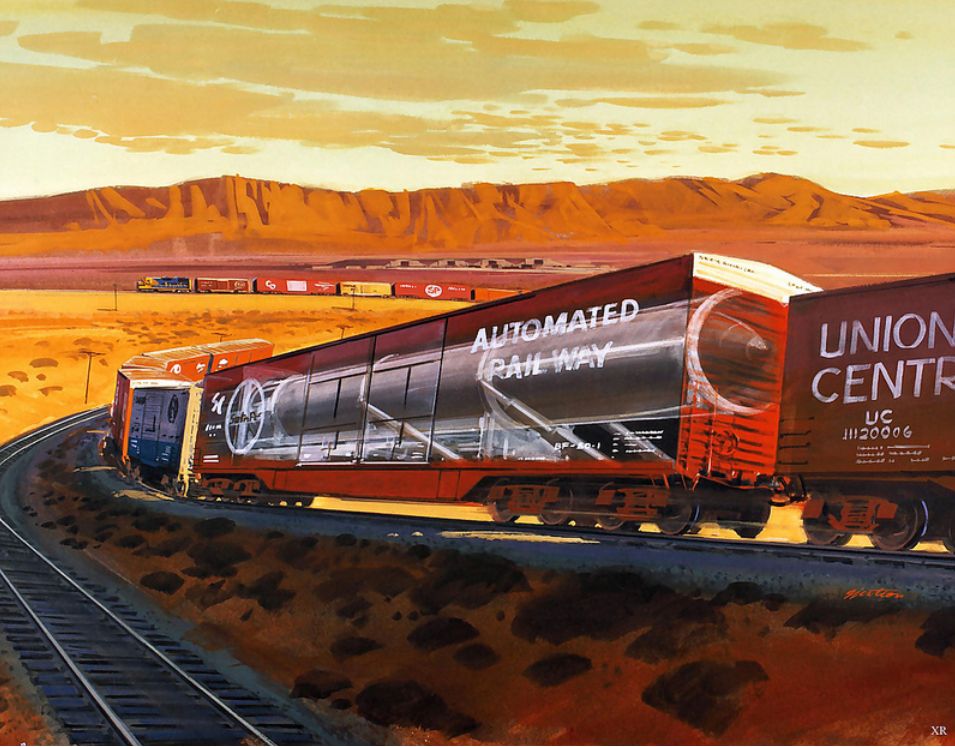
Over at Popular Mechanics, Kyle Mizokami reports that Russia is developing a rail-mounted system of mobile ICBMs that will constantly rove the country, making “the country’s nuclear arsenal more mobile and thus more difficult to locate in wartime.” Fantastic idea. But it’s hardly a new idea. The Peacekeeper Rail Garrison Car Program was developed by… Continue reading BZhRK Barguzin Russian Rail Missile Had Precedent with Peacekeeper Rail System, 1986
Category: Railroad
Cutaway drawings of locomotives, railcars, and structures related to railroads.
Super Dome Train Car Cutaway, 1952
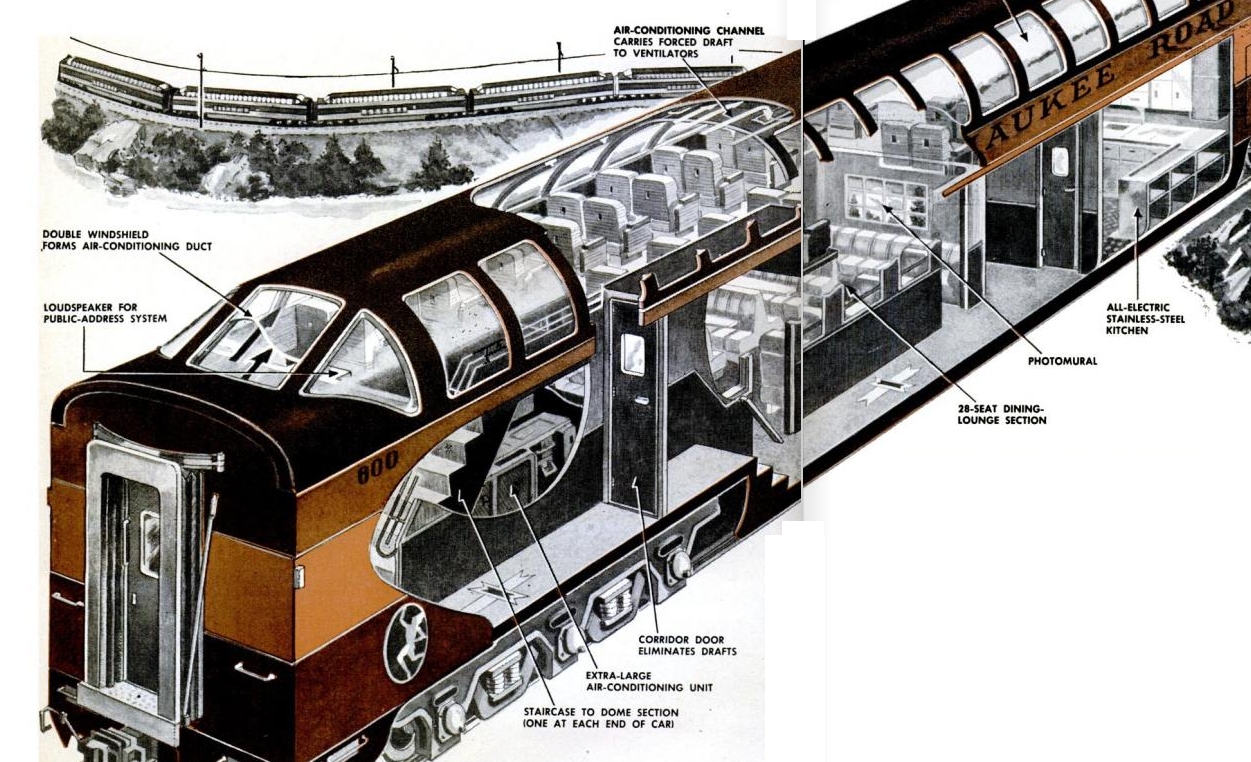
Sightseeing “dome” rail cars were not new in 1952, but to this point these VistaDomes, as they were called, had extended only partially along the length of the car. With the new Pullman super dome car, this “greenhouse” area now extended 73 feet, the entire length (more or less) of the car, accommodating 68 passengers.… Continue reading Super Dome Train Car Cutaway, 1952
Two Story Duplex Pullman Rail Car Cutaway, 1932
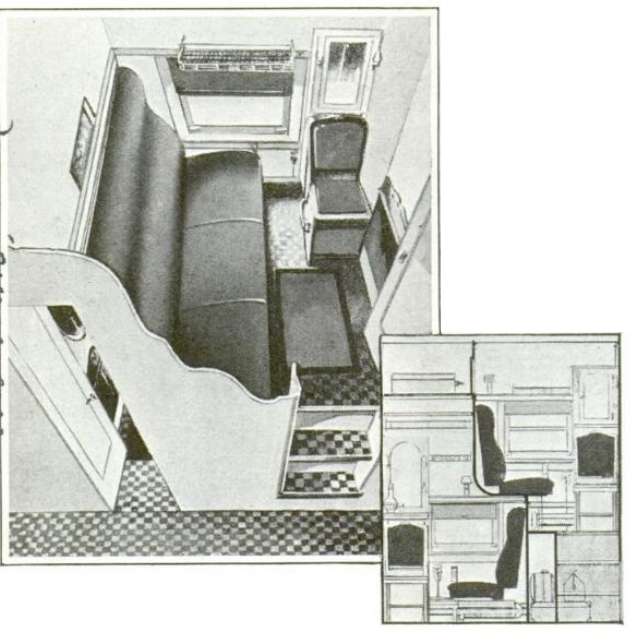
In 1932, the time of this cutaway, this two-story Pullman berth intended to offer four rooms: two up and two down. Each room would have its own daybed, sink, and toilet. The article implied that this arrangement was still in its testing phase, and that if it met “with favor,” the company would build more.… Continue reading Two Story Duplex Pullman Rail Car Cutaway, 1932
Railroad Boxcar Sweeper Arm Cutaway, 1950
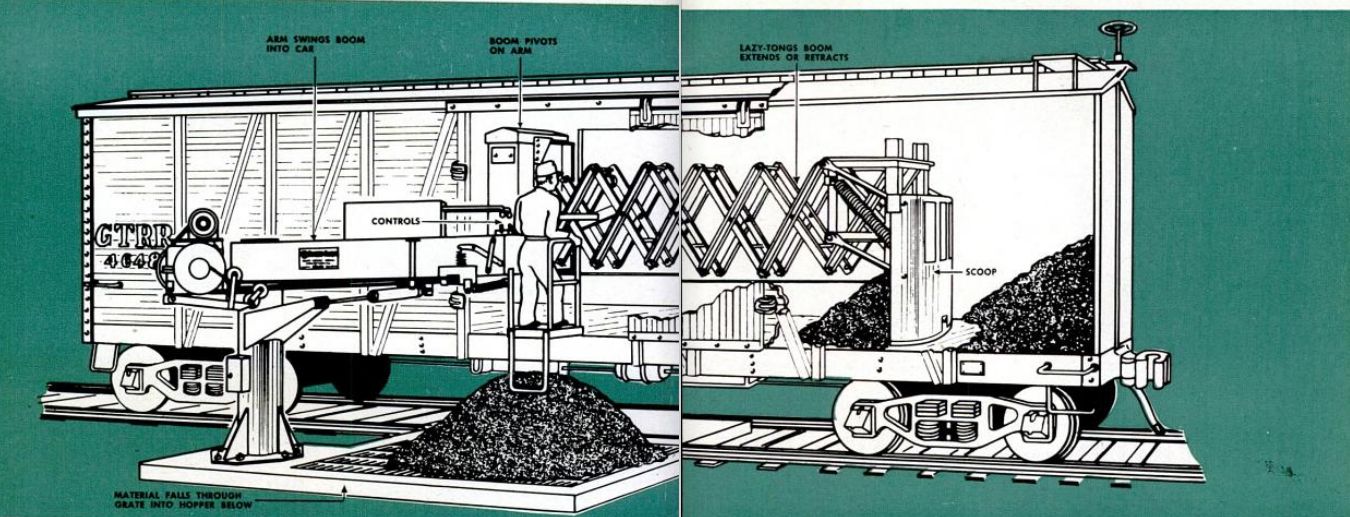
This unusual device, made by Stephens-Adamson Co. of Los Angeles, CA, reached deep into boxcars that had loose contents and swept the contents out of the open door. As it turns out, Stephens-Adamson Co. is still around today. Click to Enlarge to 1350 x 517 px: Source: Popular Science March 1950
Old vs. New Locomotive Cutaway, 1920
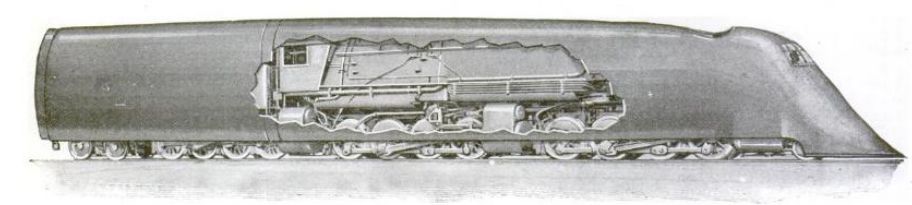
It was a fairly accurate prediction, in 1920, of the difference between the bulky locomotive of the day vs. the predicted streamlined version. The article claimed that more locomotives had been built in the last 15 years than in all of history–perhaps true. It was also claimed that, by streamlining the locomotive and cutting down… Continue reading Old vs. New Locomotive Cutaway, 1920