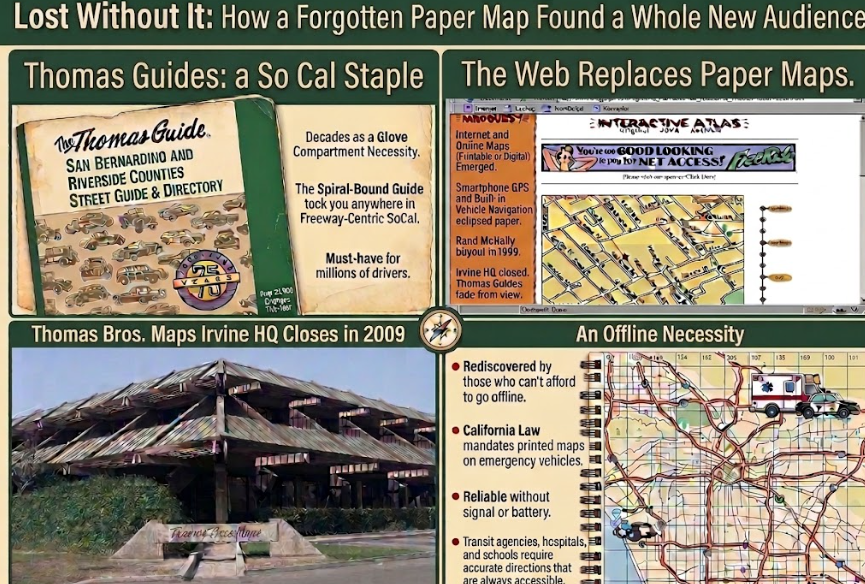
In the age of GPS navigation, paper maps aren’t just quaint; for most drivers, they’re unnecessary.
Yet this trusted companion hasn’t completely gone away, for one vital reason: offline reliability.
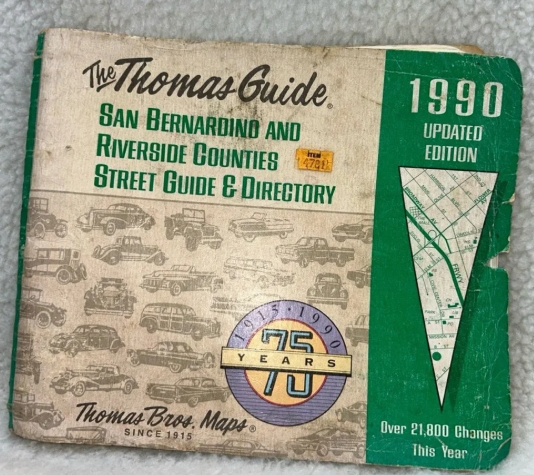
A Glove Compartment Necessity
For decades, anybody who drove and lived in Southern California had one of these spiral-bound map books in the glove compartment or floor of their car.
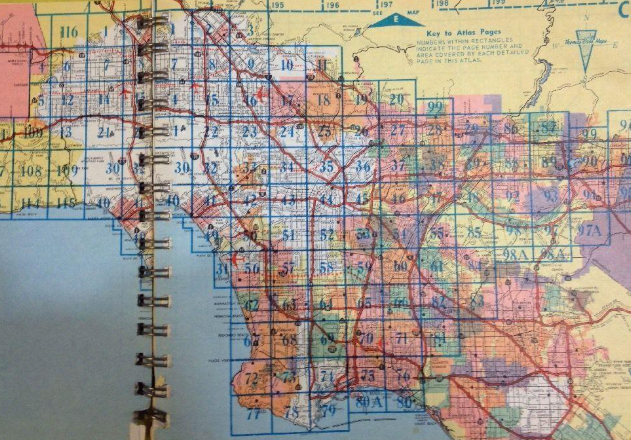
Usually torn and stained, but much-used, it was a Thomas Bros Map, usually called the Thomas Guide. This gridded map book could take you anywhere in Southern California—a necessity in this freeway-centric area.
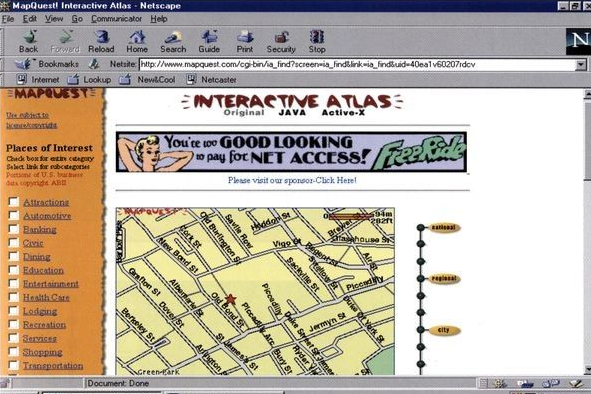
Enter MapQuest
Then the Internet happened. First it was printed MapQuest maps, then online only Google Maps. Few could doubt that smartphone GPS navigation was better than paper maps.
When navigation was built into vehicles, the fate of the Thomas Guide was sealed.
Thomas Guides Fade From View
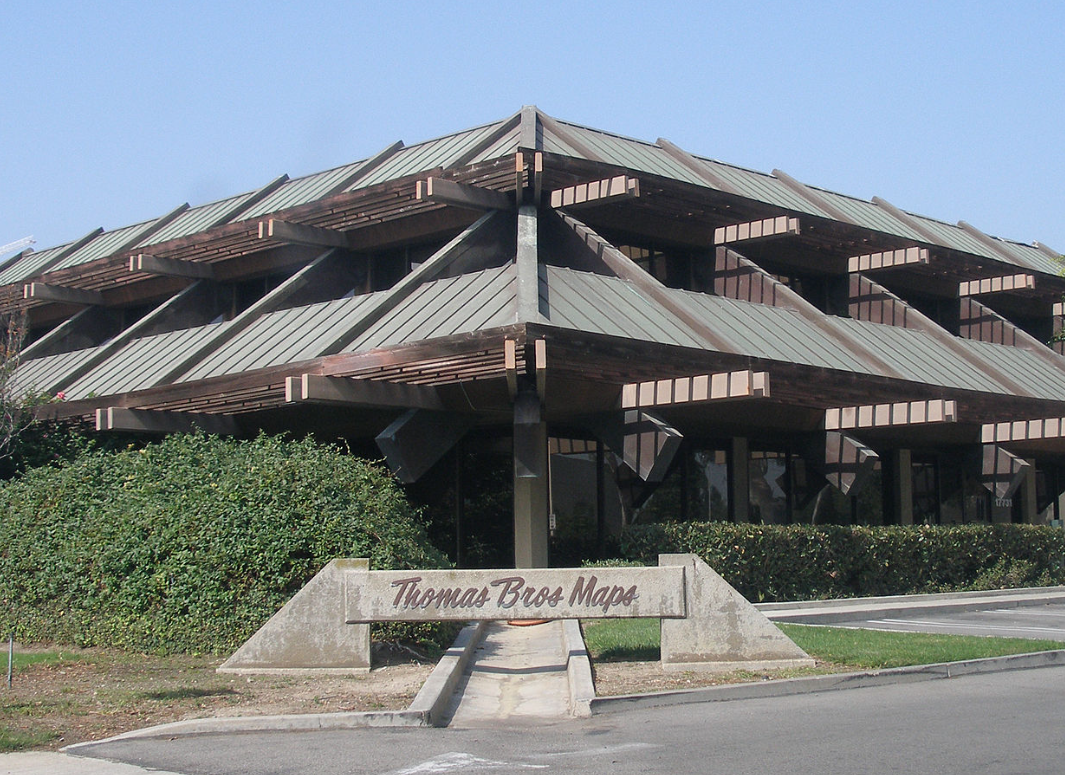
In 1999, map megastar Rand McNally bought Thomas Bros. Barely ten years later, Rand McNally closed the Thomas Bros Irvine headquarters. It looked like the Thomas Guide would fade away—for good.
A New Lease on Life: Offline Reliability
As it turns out, the Thomas Guide is valued by those who can’t afford to go offline: first responders. California law even mandates that first responders have a printed map on board every emergency vehicle.
Transit agencies, hospitals, and schools often need accurate directions that will always be accessible.
Nostalgia Buffs Won’t be Disappointed
The world’s largest collection of Los Angeles-Orange County Thomas Guides can be found in the map room of the Central Library in Downtown Los Angeles.
While GPS maps are indispensable, Thomas Guides and other paper maps help you see where you are in a broader context.